
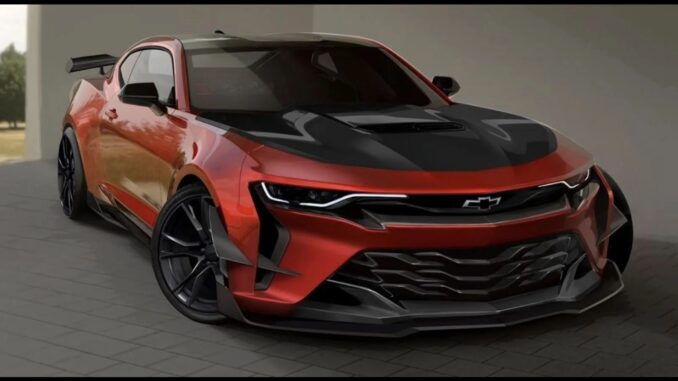
In a move that feels like a victory lap for muscle-car purists, General Motors has officially greenlit a seventh-generation Chevrolet Camaro — and it’s staying true to its roots.
The next Camaro, slated for the 2028 model year with production starting late 2027 at GM’s Lansing Grand River plant in Michigan, will ditch earlier plans for a fully electric powertrain and stick with a traditional internal combustion engine.
It’s the latest chapter in a story that began nearly 60 years ago, when the Camaro first charged onto the scene as Chevrolet’s bold answer to Ford’s Mustang.

A Pony Car Born in the Muscle-Car Wars
The Chevrolet Camaro made its debut as a 1967 model, rolling out in September 1966 with a simple mission: steal some thunder from the Mustang, which had ignited the pony-car craze two years earlier. Built on a modified Chevy II Nova platform, the first-generation Camaro offered everything from tame six-cylinder engines to fire-breathing V8s.
It was raw, affordable performance wrapped in sleek coupe or convertible bodywork — the kind of car that defined American highways in the late ’60s.
The Camaro quickly evolved into a legend. The second generation (1970–1981) stretched the longest, surviving the fuel crises and emissions crackdowns of the 1970s with increasingly sophisticated (if sometimes underpowered) designs. By the third and fourth generations (1982–2002), it had embraced modern tech like fuel injection and even a convertible revival, though sales softened as SUVs rose.
Production went dark from 2003 to 2009 — a painful hiatus that left fans wondering if the nameplate was gone for good. Then, in 2009, the fifth-generation Camaro roared back as a retro-modern beast on the Zeta platform, channeling the original’s aggressive stance.
The sixth generation (2016–2024), built on the acclaimed Alpha platform, elevated the formula with razor-sharp handling, massive power (up to 650 hp in the ZL1), and variants like the 1LE track package that made it a serious rival to European sports cars.
When the final sixth-gen Camaro rolled off the Lansing Grand River line in December 2023, it marked the end of an era. Many assumed the name was retired for good — or worse, destined for an electric reinvention.
From EV Dreams to Gas-Powered Reality
For years, the writing on the wall seemed clear. GM had pledged to go all-electric on passenger cars by 2035. Rumors swirled of a Camaro successor as a sleek EV sedan, a high-powered crossover, or even a four-door performance machine priced like the Equinox EV. Executives floated the idea publicly, and concept sketches hinted at a radical departure from the coupe formula.
But the market had other plans. As EV demand cooled in 2025–2026 — slowed by high prices, charging infrastructure gaps, and buyers clinging to the visceral thrill of engines — GM quietly shifted course. The company is now in the midst of what insiders call an “ICE renaissance,” pouring resources back into combustion engines while still advancing its broader electrification goals elsewhere.
The result?
A dramatic U-turn. Multiple sources close to GM, including reports from Automotive News and GM Authority, confirm the 2028 Camaro will ride on the rear-wheel-drive Alpha 2 platform — the same architecture underpinning the next Cadillac CT5 and a forthcoming Buick sedan. It will be front-engine, RWD, and powered by internal combustion. While full hybrid assist hasn’t been ruled out, the pure-EV and crossover ideas have been scrapped.
Production will once again happen at Lansing Grand River, the same Michigan factory that built the outgoing Camaro and now handles Cadillac sedans. That continuity matters: it keeps skilled workers in place and preserves the institutional knowledge of building a proper performance car.

Why This Matters — and What Comes Next
For die-hard Camaro fans, this is more than a product decision; it’s a cultural statement. The Camaro has always been about accessible American performance — the roar of a small-block V8, the smell of burnt rubber, and that unmistakable long-hood, short-deck silhouette. An EV version might have checked corporate boxes, but it risked alienating the very buyers who kept the name alive for six decades.
GM’s reversal also reflects broader industry trends. While EVs are here to stay, the muscle-car segment has proven remarkably resilient. Enthusiasts are willing to pay premiums for the emotional connection that only a combustion engine can deliver — something Ford recognized by keeping the Mustang ICE-powered even as it added the electric Mach-E.
Details on the 2028 Camaro’s exact specs remain under wraps: engine options (a new small-block V8 is rumored), whether it stays a strict two-door coupe or stretches into a four-door to broaden appeal, and performance targets. But the foundation is solid — a proven RWD platform that GM knows inside out.
In reviving the Camaro this way, Chevrolet isn’t just selling a car. It’s doubling down on heritage at a moment when many automakers are rushing to erase it. After a brief, uncertain pause, the pony car that helped define a generation is coming home — louder, prouder, and unmistakably itself.
The 2028 Camaro won’t be electric. And for millions of fans, that’s exactly the point.
The Crude Life Content Network
Primary Website
Follow on YouTube
Follow on Facebook
- The Crude Life Facebook Page
- Eagle Ford Texas Facebook Page
- Bakken.com Facebook Page
- Haynesville Facebook Page
- Marcellus Facebook Page
- Niobrarachalk Facebook Page
- PermianShale Facebook Page
Follow on LinkedIn
- The Crude Life LinkedIn
- The Founder of The Crude Life – Jason Spiess LinkedIn
The Crude Life has been a trusted brand pioneering energy content for 15 years — from the very first podcast in 2011 to today’s full-spectrum content company producing podcasts, video interviews, print features, radio news, social media campaigns, Substack editorials, live events and more.
Trusted Interviews. Industry Experts.


