
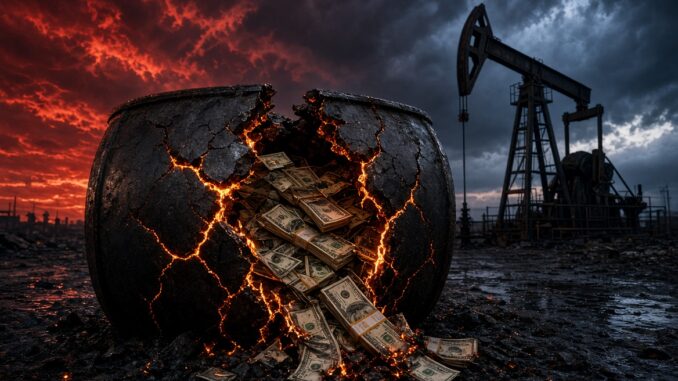
Last night’s midterms delivered an expensive and clarifying lesson for American oil and gas. The industry and its closest allies spent heavily, openly, and with purpose. The results did not match the checks.
According to Public Citizen analysis and related reporting, Chevron directed $8.2 million, Koch Inc. $6.8 million, and Energy Transfer $2 million to the Senate Leadership Fund and Congressional Leadership Fund.
The American Petroleum Institute added at least another $8 million to those two super PACs. Texas oil billionaire Tim Dunn put $5 million into a super PAC backing Republican Mike Rogers in Michigan’s Senate race and more than $11 million overall into Texas Republican PACs, the bulk of it to Texans United for a Conservative Majority.
Lone Star Liberty PAC, supporting Ken Paxton’s Senate bid, received at least $2 million from oil and gas interests, including $200,000 from the Chevron Employees PAC and $250,000 from oil executive Russell Gordy. Industry-linked donors also backed candidates in the Texas Railroad Commission race and other regulatory contests.
Across the cycle the sector and its allies spent at least $182 million trying to elect Republicans.
Republicans lost the House and Senate. Rogers lost in Michigan. Paxton lost in Texas. Susan Collins lost in Maine. Greg Abbott lost the Texas governorship. Mayes Middleton lost the Texas attorney general race. Democrats flipped the Texas Railroad Commission seat and gained control of the Georgia Public Service Commission. Safe-district incumbents such as August Pfluger and Steve Scalise won handily, as expected. Everywhere the industry treated as competitive or pivotal, the money underperformed.
Was this the industry’s frac moment?
Hydraulic fracturing transformed U.S. production and the global energy map. It also produced a more fractured industry. Majors, independents, midstream companies, service firms, and the people who work for them no longer operate with a single political voice or shared public posture.
A noticeable share of energy-company employees simply decline to defend the industry in public. They stay quiet on social media, at community events, and in mixed professional settings.
That silence is not neutral. It is a measurable political liability.
When the people closest to the work will not speak for it, the industry’s external messaging becomes thinner and easier to dismiss.
Cultural currents amplified the problem. Greta Thunberg and the youth climate movement that followed her did not invent skepticism of oil and gas. They supplied a clear moral language, a set of symbols, and a sustained narrative that resonated with a generation now entering the electorate and the workforce.
That narrative did not decide West Texas House races. It helped shape the broader atmosphere in which large industry contributions are received—as evidence of entrenched power rather than constructive engagement.
Once that frame is set, additional spending often reinforces the perception it seeks to overcome.
None of this means the industry was defeated solely by climate activism or youth organizing. Voters punished high prices. Gasoline averaged more than $4.10 a gallon and diesel more than $6 on Election Day—levels that made every fill-up a political act. The Iran conflict and the resulting supply disruption drove much of the spike.
Exit polling showed large majorities treating cost of living as the decisive issue and assigning responsibility to Republican policy choices. Oil company profits rose sharply in the same period.
The optics were brutal: industry money arriving while household energy costs climbed.
The combination proved decisive. National leadership funds received large industry checks yet could not protect majorities. Targeted races received concentrated support yet still lost. Safe energy seats held. The pattern is clear. Money spent on the wrong races, with the wrong messengers, against a cultural and economic headwind, is money spent into the ground.
The industry still produces the energy the country runs on. That fact has not changed. What changed last night is the cost of assuming political influence can be purchased at previous rates. Internal division, employee silence, generational skepticism, and pocketbook anger all compounded.
The industry can treat this as another cycle to outspend, or it can treat it as a structural warning. The second option requires honest conversation about why so many of its own people stay quiet, more serious engagement with younger workers and communities, and the discipline to stop writing large checks that buy little more than post-election analysis.
The frac moment is here. The response will determine whether the industry keeps giving money to the same executives and leaders who have created this frac in industry or begins to invest in individuals and groups who actually care about the hard working families who work in the oil and gas industry.
Jason Spiess is the founder of The Crude Life and has been an working-owner in media companies for over 40 years.

The Crude Life Content Network
Primary Website
Follow on YouTube
Follow on Facebook
- The Crude Life Facebook Page
- Eagle Ford Texas Facebook Page
- Bakken.com Facebook Page
- Haynesville Facebook Page
- Marcellus Facebook Page
- Niobrarachalk Facebook Page
- PermianShale Facebook Page
Follow on LinkedIn
- The Crude Life LinkedIn
- The Founder of The Crude Life – Jason Spiess LinkedIn
The Crude Life has been a trusted brand pioneering energy content for 15 years — from the very first podcast in 2011 to today’s full-spectrum content company producing podcasts, video interviews, print features, radio news, social media campaigns, Substack editorials, live events and more.
Trusted Interviews. Industry Experts.