
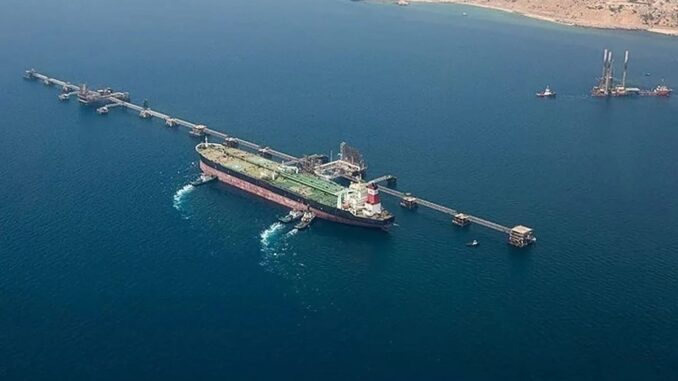
As of November 20, 2026, the first confirmed ship-to-ship transfer of Iranian crude since the U.S. reinstated its naval blockade in mid-July has drawn attention, even as the broader market digests recovering Gulf supplies and softer near-term prices.
What Happened
On November 17, the U.S.-sanctioned Suezmax tanker Olym transferred roughly 200,000 barrels of Iranian crude to the medium-range tanker Hao Fan just south of Kharg Island, Iran’s primary export terminal. Both vessels went dark (AIS off) during the operation. Hao Fan, which is not on the U.S. sanctions list, has been spoofing its position near Oman’s Shinas.
This is the first observed crude transfer of its kind since the blockade resumed. Analysts at United Against Nuclear Iran (UANI) and Kpler flag the volume as too small for a commercial long-haul export voyage, suggesting it may serve other purposes (storage management, technical issues, or testing the waters). No confirmation yet that the oil has cleared the blockade line.
The following day, U.S. Central Command expanded the blockade rules: any vessel receiving Iranian cargo via ship-to-ship transfer can now be treated as attempting to evade the blockade, even if it never enters Iranian waters. Enforcement options include boarding, diversion, seizure, or the use of force.
Iranian crude exports have been effectively zero since September under the blockade. Production has fallen sharply (IEA estimates around 1.86 million bpd in October, down from ~3.4 million pre-war). Storage is building and tankers remain stranded near Kharg.
Market Backdrop
Oil prices have been under pressure recently despite ongoing Hormuz risks.
As of November 20, Brent was trading near $91 and WTI near $82, on track for a third straight weekly decline. Stronger Middle East export flows (recovering toward pre-war levels for non-Iranian producers), rising U.S. inventories (+3.4 million barrels in the latest EIA report to 417.8 million), and expectations of a global surplus in Q4 have outweighed geopolitical risk premiums.
U.S. crude production remains near record levels (EIA forecasts ~13.9 million bpd for 2026, rising further in 2027), and exports have stayed robust.

Impact on the U.S. Oil & Gas Industry
Near-term effects are limited and mixed:
- Price support is muted. The Olym–Hao Fan transfer is small and has not shifted the market narrative. Recovering non-Iranian Gulf volumes and U.S. inventory builds are currently the bigger drivers. Any successful Iranian crude breakthrough would add only marginal supply and is unlikely to move prices materially in isolation.
- U.S. producers benefit from the status quo. Keeping Iranian barrels largely offline continues to support a higher floor under global prices than would exist otherwise. This is constructive for Permian, Eagle Ford, and Bakken operators, as well as for associated natural gas and NGL volumes. Higher realized prices flow through to cash flow, capital budgets, and dividends.
- Export competitiveness remains strong. The U.S. has become a more critical supplier to Europe and Asia during the conflict. Elevated freight and insurance costs out of the Gulf, combined with Iranian volumes being constrained, help sustain demand for U.S. crude and products. Wide Brent-WTI spreads (when present) further favor U.S. exports.
- Refiners face a two-sided picture. U.S. refiners benefit from relatively cheaper domestic crude versus international benchmarks, but elevated product prices (especially diesel earlier in the conflict) have been a mixed blessing—good for margins when crack spreads are strong, less so if demand softens under higher pump prices.
- Risk premium works both ways. Persistent Hormuz tensions and the expanded blockade keep a geopolitical premium in the market. This supports upstream profitability but raises costs for shipping, insurance, and any U.S. companies with regional exposure. Escalation (further Iranian attempts to break the blockade or renewed attacks) could quickly reverse the recent price softness.
Longer-term considerations:
- Sustained Iranian export constraints reinforce the U.S. position as a reliable swing supplier and energy security partner.
- If Iran eventually succeeds in meaningful crude exports via creative STS transfers or other means, it would add back discounted barrels primarily into the Chinese market—potentially pressuring medium-sour grades that compete with some U.S. and Gulf crudes.
- Continued pressure on Iranian production and revenue may influence the broader conflict trajectory, which remains the dominant uncertainty for global oil balances.
Bottom line for U.S. industry: The latest transfer is a notable tactical development and a signal that Iran is probing for ways around the blockade, but it does not change the fundamental picture. Iranian crude remains largely sidelined, which is net supportive for U.S. producers and exporters. Market focus remains more on recovering Gulf flows, U.S. inventory trends, and whether the current soft price environment persists into year-end.

The Crude Life Content Network
Primary Website
Follow on YouTube
Follow on Facebook
- The Crude Life Facebook Page
- Eagle Ford Texas Facebook Page
- Bakken.com Facebook Page
- Haynesville Facebook Page
- Marcellus Facebook Page
- Niobrarachalk Facebook Page
- PermianShale Facebook Page
Follow on LinkedIn
- The Crude Life LinkedIn
- The Founder of The Crude Life – Jason Spiess LinkedIn
The Crude Life has been a trusted brand pioneering energy content for 15 years — from the very first podcast in 2011 to today’s full-spectrum content company producing podcasts, video interviews, print features, radio news, social media campaigns, Substack editorials, live events and more.
Trusted Interviews. Industry Experts.

