
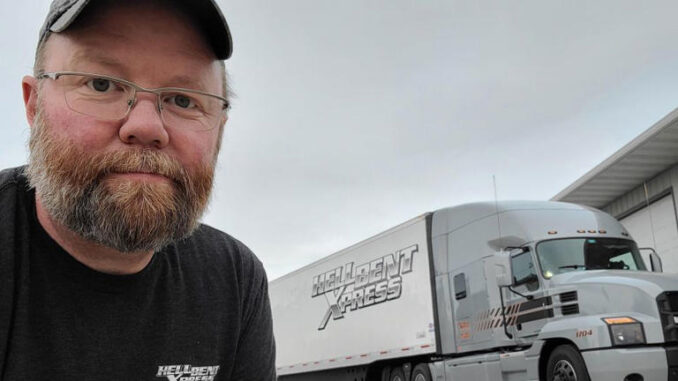
When Jamie Hagen, owner of Hell Bent Xpress in South Dakota, refinanced his equipment last year, he thought the worst of the post-pandemic “Great Freight Recession” was behind him. Freight rates were showing signs of life after a brutal stretch of thin margins and excess capacity. “We started seeing some real progress. There was a lot of hope,” he told CNN.
Then the Iran war erupted, sending diesel prices surging. What followed has been a painful reminder of just how vulnerable small trucking businesses remain in an industry long defined by boom-and-bust cycles.
According to the CNN report, diesel — the single largest day-to-day expense for most trucking operations — jumped 41% since the start of the conflict, pushing the national average to nearly $5.38 per gallon at the time. As of mid-to-late April 2026, the U.S. Energy Information Administration (EIA) weekly on-highway diesel average has hovered around $5.40–$5.60 per gallon, with peaks exceeding $5.60–$5.80 in some regions earlier in the month. That’s roughly $1.80–$2.00 higher than year-ago levels in many cases, adding tens of thousands of dollars in annual costs for even modest fleets.
The Uneven Pain: Small Operators vs. Big Carriers
The disparity in how this diesel spike hits different parts of the industry is stark.
Small fleet owners and independent owner-operators — who make up a huge portion of the roughly 450,000 long-haul truckload operators in the U.S. — are absorbing the brunt. Many rely on the volatile spot market, where shippers post one-off loads and rates are negotiated “all-in,” without separate fuel surcharges. When diesel climbs sharply, these operators often recover only a fraction of the added cost through higher rates, if at all.
“Small guys in spot market are really getting dumped on right now,” said Dean Croke, principal analyst at DAT Freight & Analytics, in the CNN article. Hagen echoed the frustration: his costs shot up 20 cents per mile, erasing his typical slim profit of about five cents per mile and turning many hauls into losses. Cash flow has become his biggest headache, with payments often delayed for weeks or months after delivery while fuel bills hit immediately.
At one stop, Hagen’s pump hit $999.99 and shut off before filling his tank completely. For independents like him and Christopher Lloyd, a Virginia-based owner-operator who invested $187,000 in a new flatbed truck, the math is unforgiving. Lloyd has adapted by hunting the cheapest fuel stops, skipping truck washes, pressing brokers for extras, and rejecting unprofitable routes — but he acknowledges the industry’s long-term slide toward “an economic backwater” since deregulation in the 1970s and 1980s.
In contrast, large carriers such as JB Hunt and Schneider National are far better insulated. They operate under long-term contracts that include automatic fuel surcharges, maintain more fuel-efficient fleets, and often use sophisticated hedging strategies. This structural advantage accelerates industry consolidation: small operators park rigs or exit, while bigger players gain market share.
Recent industry analyses confirm this pattern. Fuel costs per mile have risen 21–24 cents in short windows during the spike — one of the fastest increases on record — hitting owner-operators hardest because they lack bulk purchasing power, hedging tools, or the working capital to weather delays. Some have shifted to company driver roles to shed personal fuel risk, while others cut “deadhead” (empty) miles or slow down to conserve fuel.
Broader Ripple Effects on Small Businesses and the Economy
Trucking isn’t just any small business sector — it moves roughly 70% of U.S. freight by value. When small operators struggle, the pain spreads:
- Capacity Tightening: Parked trucks and exits among small fleets (which dominate the for-hire segment) can reduce available capacity. This has already begun lifting spot rates modestly in 2026, with some reports showing dry van spot rates in the $2.50–$2.70+ per mile range in stronger lanes. Over time, this rebalancing could support healthier rates for survivors — but the transition is brutal for those forced out.
- Higher Costs Downstream: Trucking expenses feed directly into consumer prices for groceries, retail goods, construction materials, and more. Analysts note that sustained high diesel can add upward pressure on the broader CPI, as transportation is embedded in nearly every supply chain.
- Cash Flow and Survival: Many small operators run on razor-thin margins even in good times. A sudden 40%+ fuel jump, combined with payment lags, creates immediate liquidity crises. Some reports describe small carriers cutting non-essential costs or turning down loads that no longer pencil out.
The boom-bust nature of trucking amplifies everything. Thousands of new owner-operators flooded in during the 2021–2022 pandemic surge, chasing elevated rates fueled by stimulus and e-commerce. When demand cooled in late 2022, oversupply crushed rates. Today’s stagnant baseline rates (still reflecting that excess capacity) left little buffer when the diesel shock arrived.
The Diesel Market Context
The price surge traces primarily to geopolitical disruption from the Iran conflict, including fears over the Strait of Hormuz and reduced Gulf output. Diesel has been especially hard-hit compared to gasoline because refining yields and global supply dynamics make it more sensitive to certain crude disruptions.
While prices have moderated slightly from April peaks, they remain elevated, with forecasts for 2026 averaging well above pre-war expectations.
For the diesel industry itself (refiners, distributors, and retailers), the volatility creates winners and losers. Higher prices boost margins for those with inventory or production flexibility, but extreme swings disrupt planning and can suppress demand if economic activity slows.
Trucking, which consumes a massive share of U.S. diesel, acts as both a major customer and a bellwether for broader fuel demand.
Resilience and Outlook
Not everyone is quitting. Lloyd, a self-described “lifer,” plans to hang on “as long as I can still feed myself and keep the lights on.” Hagen and others are weighing options — parking rigs, seeking better lanes, or hoping the culling of capacity eventually lifts rates enough to restore profitability.
Industry observers expect the current pressure to accelerate exits among marginal small operators, potentially tightening the market later in 2026 and supporting rate recovery. Spot rates have shown some upward momentum, partly reflecting fuel pass-through, and contract rates are gradually adjusting.
Still, the human and small-business toll is real. For many independent truckers, the dream of owning their rig and controlling their destiny has become a high-stakes gamble against forces far beyond their control — from geopolitical shocks to persistent fuel volatility.
As one analyst put it, this isn’t just a trucking story; it’s a reminder of how energy costs remain a foundational input for the entire economy, with small businesses often serving as the shock absorbers.
The Crude Life Content Network
Primary Website
Follow on YouTube
Follow on Facebook
- The Crude Life Facebook Page
- Eagle Ford Texas Facebook Page
- Bakken.com Facebook Page
- Haynesville Facebook Page
- Marcellus Facebook Page
- Niobrarachalk Facebook Page
- PermianShale Facebook Page
Follow on LinkedIn
- The Crude Life LinkedIn
- The Founder of The Crude Life – Jason Spiess LinkedIn
The Crude Life has been a trusted brand pioneering energy content for 15 years — from the very first podcast in 2011 to today’s full-spectrum content company producing podcasts, video interviews, print features, radio news, social media campaigns, Substack editorials, live events and more.
Trusted Interviews. Industry Experts.


