
New data and industry announcements highlight ongoing consumer preference for traditional internal combustion engine (ICE) vehicles amid shifting economics and policy landscapes.
According to EY’s 2025 Mobility Consumer Index, 58% of Canadian respondents now say they plan to purchase an internal combustion engine vehicle in the next two years — an increase of 14 percentage points from the previous year. Preference for electric vehicles (EVs) dropped sharply to just 7%, down 15 percentage points year-over-year.
The survey points to affordability as a primary factor. Nearly one-third (32%) of respondents cited high vehicle pricing, noting that entry-level EVs still start in the $40,000 range. Concerns around charging reliability and overall practicality also weighed on decisions.
Policy changes played a noticeable role. Three in ten Canadians who had been considering an EV reported delaying or reconsidering their purchase after the federal government paused the zero-emission vehicle incentive program in January 2025. Another 30% cited recent geopolitical and economic uncertainty as reasons for hesitation.
EY Senior Manager Sara Ganowski noted that affordability has become the dominant barrier for potential EV buyers, especially in the current cost-of-living environment. She added that incentives continue to influence consumer choices.
In response, the federal government reintroduced an EV affordability program last month, offering up to $5,000 on qualifying vehicles priced at $50,000 or less, along with plans to expand charging infrastructure.
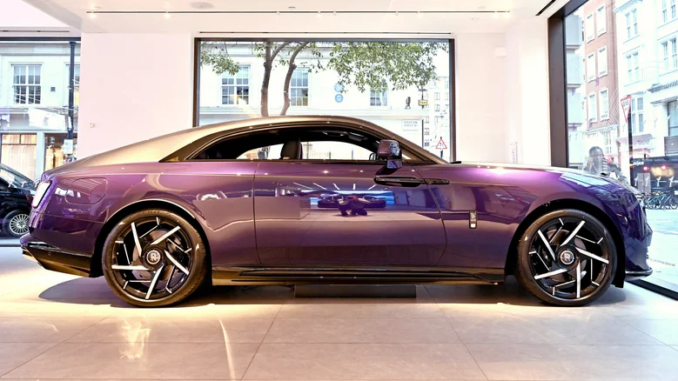
This consumer-level trend finds an echo at the ultra-luxury end of the market. Rolls-Royce has extended the availability of its signature V12 engine beyond the previously targeted 2030 cutoff. The British marque had launched its first all-electric model, the Spectre, in 2022 and initially planned a full transition away from gasoline engines by the end of the decade, partly in anticipation of stricter regulations such as the EU’s original 2035 ICE ban.
Rolls-Royce CEO Chris Brownridge said the company is responding directly to client demand. “We can respond to our client demand. We build what is ordered,” he stated, noting that the V12 remains part of the brand’s heritage for some customers.
The adjustment also reflects recent regulatory softening in Europe, including changes to Euro 7 emissions standards and a relaxation of the 2035 combustion-engine ban timeline. Rolls-Royce is not abandoning electrification — the Spectre remains in production, and the next-generation Cullinan (the brand’s best-selling model) will be offered with both an all-electric option and continued V12 availability.
Together, the Canadian consumer survey and Rolls-Royce’s decision illustrate a broader pattern: while electric propulsion continues to advance, real-world demand for internal combustion engines persists across different market segments, driven by economics, practicality, customer preference, and evolving policy signals.