
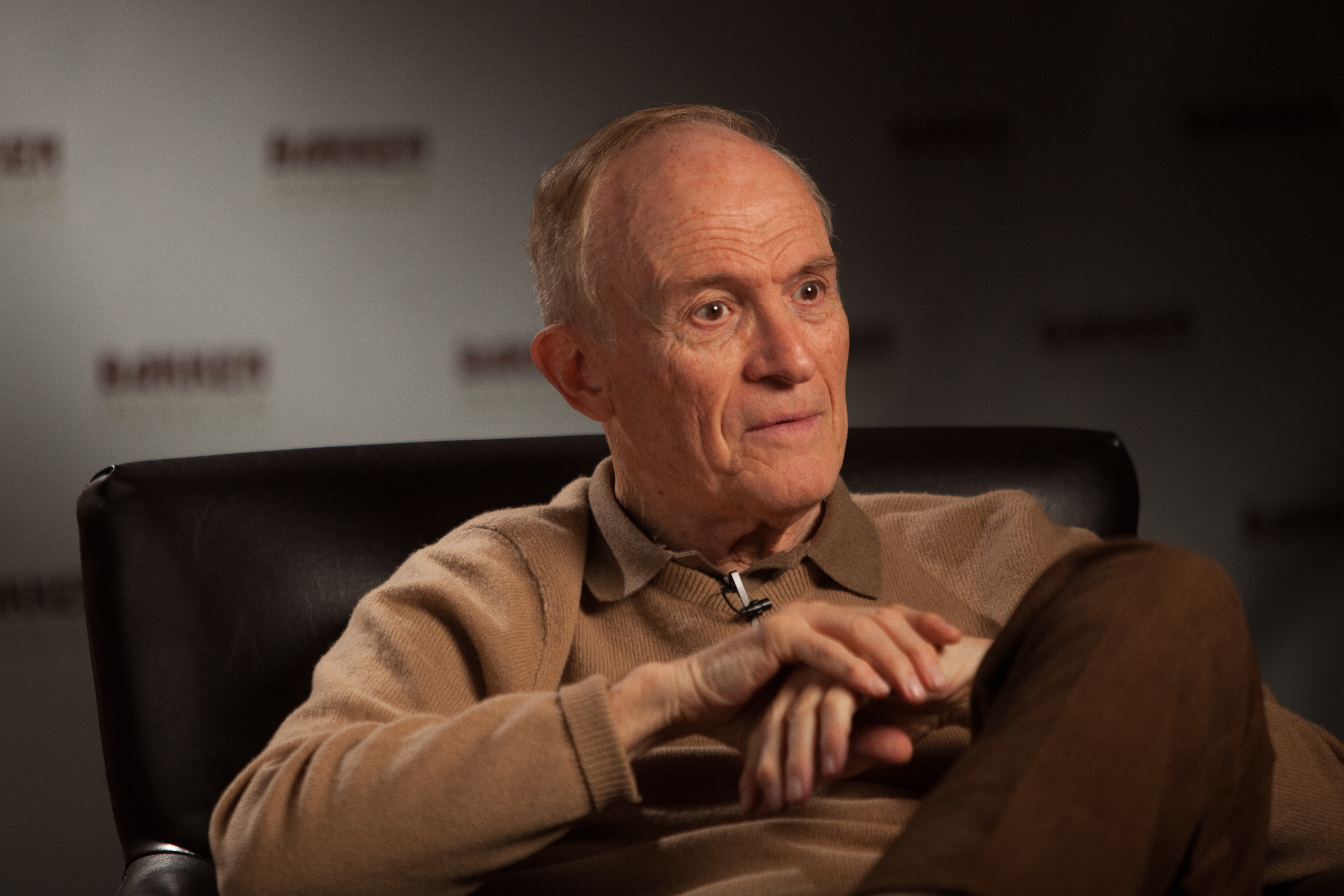


Dale Brown spent 25 years building LSU into a national basketball power. He won 448 games, led the Tigers to two NCAA Final Fours, captured four Southeastern Conference championships, and coached some of the game’s most recognizable players, including Shaquille O’Neal.
But when I interviewed Brown in 2014, the conversation went beyond basketball. We talked about North Dakota, the people who shaped his life, the players who made those around them better, and the principles he believed should guide a person through life.
Looking back on that conversation following Brown’s death at age 90 on October 23, 2026, what stands out is not simply what he accomplished. It is what he believed those accomplishments were supposed to mean.
Brown was the winningest men’s basketball coach in LSU history. His teams reached the Final Four in 1981 and 1986, and his tenure helped establish LSU as a destination for elite basketball talent. He was also named national coach of the year in 1981 and earned four SEC Coach of the Year honors.
Those numbers tell part of the story. The interview revealed another part.

The lessons that started at home
Brown spoke with deep respect about his mother, describing her as a wonderful teacher and “one of the most pathologically honest people I’ve ever met.”
His early life had not been easy. He described growing up without his father, who had left before Brown was born, and the example his mother set for him and his sisters.
Her honesty wasn’t just a quality he admired. It was a lesson in how to live.
That perspective came through repeatedly during our conversation. Brown didn’t talk about character as something separate from achievement. He treated it as the foundation beneath it.
He had spent decades in a profession where wins and losses defined public opinion, where reputations could be built or damaged in a season, and where the pressure to succeed was relentless. Yet his advice returned to something simpler: be honest, be sincere, and don’t lose sight of what matters.

A North Dakota coach in Louisiana
Brown was a Minot, North Dakota, native whose career eventually took him to the heart of Southeastern Conference basketball.
Before arriving at LSU in 1972, he had been a high school coach, teacher and principal. He later served as an assistant coach at Utah State and Washington State before getting the opportunity to lead the Tigers.
When he arrived in Baton Rouge, the idea of making LSU a national basketball power was a daunting proposition. Louisiana was known for its passion for football, and Brown had to persuade people to believe that basketball could command a place of its own.
He believed in the possibility before the results proved him right.
During our interview, Brown spoke about the influence of his North Dakota upbringing, including the independence, work ethic and straightforwardness he associated with the people and communities there. Despite the distance his career had taken him, North Dakota remained home in a meaningful way.
His story was a reminder that a person can travel far without leaving behind the experiences that shaped them.

The One Former Player I Asked Dale Brown About
One of my strongest memories from the interview happened before we started recording. I asked if I could ask him about a former player, which he agreed. He assumed it would be Shaquille O’Neal.
When I asked Brown about former LSU player Randy Livingston, I watched his expression change. His eyes widened, his posture perked up, and a grin spread across his face.
It was a memorable reaction. Nearly two decades after Livingston’s college career, here was a coach who still had an immediate enthusiasm for talking about him.
Brown’s comments about Livingston in the recorded interview explained why.
He described Livingston as a coach on the floor, someone who understood the game and made the people around him better. Brown drew a distinction between players who put up great statistics and those who elevate their teammates.
“Stars have great statistics,” he said. “Superstars make other people better.”
It was one of the clearest expressions of Brown’s philosophy during our conversation. Individual talent matters, but its greatest value may be what it brings out in other people.
The moment before the interview stayed with me because of the enthusiasm I saw firsthand. The recorded conversation gave that moment context: Brown wasn’t simply remembering a player’s accomplishments. He was talking about the ability to make a team better.
That is a lesson that extends well beyond a basketball court.

Keep it simple. Be sincere.
Brown also shared advice he had learned from legendary UCLA coach John Wooden.
When we discussed the tendency to overthink decisions and make problems more complicated than they need to be, Brown recalled Wooden’s words:
“We should always practice simplicity with constant repetition.”
Brown followed that thought with advice of his own: “Don’t overthink. Don’t complicate things.”
It was practical advice from someone who had spent a career making decisions under pressure. But he also applied those principles to communication and leadership.
When talking about public speaking, Brown emphasized not showing off, keeping things simple and being sincere. His point was not that the details never mattered. It was that substance should matter more than performance.
The same principle appeared in his discussion of ethics. Brown spoke against manipulation, dishonesty, greed and taking shortcuts. He described wanting to have faith, lift others and help them.
These were not abstract ideals offered without context. They were principles he returned to when explaining how he believed people should conduct themselves.

An unexpected word of encouragement
There is one part of my experience with Brown that the recording did not capture.
After our interview ended, and with coworkers and colleagues present, Brown offered me unsolicited encouragement about my work. He told me he was impressed and encouraged me to keep doing what I was doing, explaining that he knew talent when he saw it.
I did not go into the interview expecting that exchange. I had interviewed Brown as a journalist, and our conversation had been about his life, his coaching career and his philosophy. I had no reason to expect a personal assessment of my own work.
I remember it because he chose to say it without being asked. His compliment had examples and substance behind it. It didn’t feel superficial or like someone simply being North Dakota nice. In fact, I didn’t see him offer that same kind of encouragement to anyone else that day, a detail that wasn’t lost on me, professionally or personally.
I don’t share that memory to suggest I knew Brown well or that our interaction was anything more than it was. We spoke in an interview, and afterward, he took a moment to encourage someone else in the profession. But the specificity of what he said, and the fact that he chose to say it, gave me a firsthand glimpse of the generosity behind the public figure.
It also connects with what he said about Livingston: the ability to recognize something in another person and encourage it to grow.
Brown had spent his career evaluating talent, developing players and challenging people to reach their potential. That work was most visible on the basketball court. But encouragement does not stop being valuable when the scoreboard disappears.
Sometimes, it is a brief conversation that stays with a person for years.

A legacy beyond the scoreboard
Dale Brown’s place in LSU basketball history is secure. His 448 victories, four SEC championships and two Final Four appearances will remain part of the program’s record. His influence also lives on through the players he coached and the people who learned from him.
In the days before his death, Brown was named the recipient of the 2027 John R. Wooden Legends of Coaching Award, a recognition of a career whose reach extended beyond wins and losses.
His family’s statement following his death described him as a man who always put others first, led with his heart and was a great humanitarian before anything else.
That description resonates with the Dale Brown I encountered in our 2014 conversation—not because one interview could tell me everything about a person, but because the values he expressed then were consistent with that picture of the man his family remembered.
Brown spoke about honesty, simplicity, sincerity and helping others. He praised a player for making his teammates better. And after our conversation, he took a moment to encourage someone he had interviewed.
None of those moments tells the whole story of Dale Brown. Together, they offer a glimpse of what he wanted people to understand about success.
The wins matter. The championships matter. The players and the history matter.
But the measure of a life can also be found in the principles a person leaves behind, the people they help, and the encouragement they give when they have no obligation to give it.
Dale Brown spent a lifetime coaching basketball. The lessons he shared were about something larger: how to live with honesty, how to recognize the potential in others, and how to leave people better than you found them.
That may be one of the most enduring ways to remember him.
The Crude Life Content Network
Primary Website
Follow on YouTube
Follow on Facebook
- The Crude Life Facebook Page
- Eagle Ford Texas Facebook Page
- Bakken.com Facebook Page
- Haynesville Facebook Page
- Marcellus Facebook Page
- Niobrarachalk Facebook Page
- PermianShale Facebook Page
Follow on LinkedIn
- The Crude Life LinkedIn
- The Founder of The Crude Life – Jason Spiess LinkedIn
The Crude Life has been a trusted brand pioneering energy content for 15 years — from the very first podcast in 2011 to today’s full-spectrum content company producing podcasts, video interviews, print features, radio news, social media campaigns, Substack editorials, live events and more.
Trusted Interviews. Industry Experts.


