
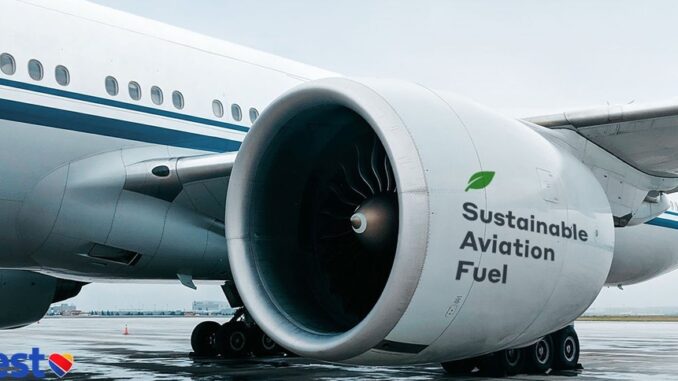
In the high-stakes world of aviation, where reliability isn’t optional and emissions targets are tightening, Phillips 66 is proving that practical solutions beat rhetoric. Their latest push in Sustainable Aviation Fuel (SAF) focuses on delivering both the physical fuel — “the molecule” — and the verified environmental accounting — “the math” — that customers actually need.
Aviation fuel demand isn’t going away. With global air travel projected to keep growing, the industry needs drop-in solutions that work in existing aircraft and infrastructure today.
Phillips 66 Aviation, which supplies roughly 10% of U.S. jet fuel and has nearly a century of experience serving FBOs, airlines, logistics companies, and government fleets, is stepping up with real production capacity.
Major SAF Footprint
At the heart of their effort is the Rodeo Renewable Energy Complex in California — one of the world’s largest renewable fuels facilities. It processes up to 800 million gallons per year of feedstock and produces around 150 million gallons per year of neat (100% renewable) SAF. The site also supports more than 600 jobs and demonstrates that large-scale renewable fuel production can happen in the United States.
Across the Atlantic, Phillips 66’s Humber Refinery in the U.K. stands as the only commercial-scale SAF producer in the country. Globally, the company trades approximately 80,000 barrels per day of renewable feedstock and products.
SAF, made primarily from waste fats, used cooking oils, and greases, offers a practical path forward. It’s a true drop-in fuel compatible with today’s planes and fueling systems. On a neat basis, it can deliver up to 80% lower life-cycle greenhouse gas emissions compared to conventional jet fuel, along with meaningful reductions in other pollutants: up to 38% lower sulfur oxides, 11% lower carbon monoxide, and 62% lower particulate matter.

Molecule + Math = Real Customer Value
What sets Phillips 66 apart, according to their own messaging, is the ability to deliver both the physical molecule and the associated environmental attributes. Airlines and corporate customers need the actual fuel to reduce Scope 1 emissions, but many also require verified credits to address Scope 3 emissions across their broader value chains.
The company has been active on the SAFc Registry, accounting for roughly one-third of the registry’s more than 500,000 metric tons of CO₂e abated to date. This “math” matters for companies with aggressive sustainability goals.
Recent deals highlight the momentum:
- A multi-year agreement with DHL Express (announced 2025) for over 240,000 metric tons of SAF, projected to reduce approximately 737,000 metric tons of GHG.
- Collaboration with United Airlines for 11 million gallons as part of broader industry efforts.
Ronald Sanchez, Vice President of Phillips 66 Aviation, emphasizes that strong operational capabilities must be paired with cross-industry collaboration and supportive policy to truly scale SAF.
Phillips 66’s approach reflects a grounded reality in the energy sector: the world still needs reliable liquid fuels for hard-to-electrify segments like aviation, while pursuing lower-carbon options where they make technical and economic sense. By converting waste feedstocks into high-specification fuels at existing and repurposed facilities, the company is demonstrating how traditional energy players can lead in the next chapter of transportation energy.
As policy debates continue around mandates, incentives, and infrastructure, projects like Rodeo show that investment is happening where conditions allow. The question now is whether regulators and stakeholders will create an environment that supports continued scaling — or risks sending capital and production overseas.
START LIVING THE CRUDE LIFE TODAY!!!

CLICK HERE FOR SPECIAL PARAMOUNT + DISCOUNT LINK
The Crude Life Content Network
Primary Website
Follow on YouTube
Follow on Facebook
- The Crude Life Facebook Page
- Eagle Ford Texas Facebook Page
- Bakken.com Facebook Page
- Haynesville Facebook Page
- Marcellus Facebook Page
- Niobrarachalk Facebook Page
- PermianShale Facebook Page
Follow on LinkedIn
- The Crude Life LinkedIn
- The Founder of The Crude Life – Jason Spiess LinkedIn
The Crude Life has been a trusted brand pioneering energy content for 15 years — from the very first podcast in 2011 to today’s full-spectrum content company producing podcasts, video interviews, print features, radio news, social media campaigns, Substack editorials, live events and more.
Trusted Interviews. Industry Experts.


