
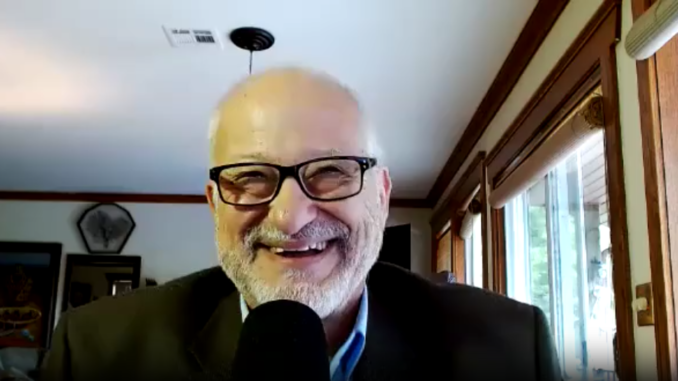


The Crude Life, founder Jason Spiess sat down with Stuart Turley, founder and host of the Energy News Beat podcast, for an energized conversation covering California’s precarious fuel situation, shifting U.S. energy politics, the challenges of renewable energy, and the need for pragmatic, “America First” policy approaches.
Turley opened by highlighting a recent Energy News Beat episode titled “California Running on Empty,” which he described as a national security issue of “biblical proportions.” He noted that California has seen its refinery count drop dramatically—from around 38 in past decades to just 7 operational refineries today, with 6 of those facing potential closure due to regulatory pressures, including the state’s Cap-and-Trade program and other policies under Governor Gavin Newsom.
California now imports 40–60% of its gasoline, diesel, and jet fuel. Turley warned that the loss of even one more refinery could push pump prices to $10–$15 per gallon, exacerbated by maxed-out port import capacity, long tanker wait times (costing $100,000–$200,000 per day), and reduced exports from Asia. He argued these policies are not truly “green” but are instead destroying the state’s economy and threatening broader U.S. fuel supply chains, including impacts on neighboring states and military readiness.

The discussion referenced recent work by USC Professor Michael Mische (along with co-authors) proposing seven executive orders for the Trump administration to help stabilize the situation. Suggestions included invoking the Defense Production Act, leasing idled refineries (such as Valero’s Benicia facility) for seven years, boosting domestic production, and prioritizing diesel and jet fuel output for critical needs.
Spiess connected these issues to broader economic ripple effects. He pointed to the sharp rise in jet fuel and diesel prices since the start of 2026 and drew parallels to supply-chain disruptions during COVID, warning that doubled transportation costs could fuel significant inflation across goods, airlines, and trucking.
Turley agreed the U.S. faces a structural shift in global oil markets but noted some positive developments, including changes in Venezuela’s pricing mechanisms (reducing China’s discounted access), increased activity by companies like Chevron and Shell, and the restart of offshore production via Sable Offshore adding tens of thousands of barrels per day from California’s Santa Ynez Unit.

Broader Themes: Politics, Polarization, and Energy Realism
The conversation moved beyond California to larger societal and political trends. Both hosts expressed frustration with “RINOs” (Republicans In Name Only) and “DINOs” (Democrats In Name Only), arguing that an entrenched uniparty has hindered progress on key legislation, such as codifying executive orders or passing the Save America Act.
They advocated for an “America First” focus over strict party loyalty and lamented how polarization has made even basic conversations difficult—including within families.
Spiess, who described himself as a “first-generation oil and gas” media veteran with roots in agriculture, shared observations from embedding in oilfield communities. He argued that politics has increasingly “ruined” fields like science, energy, agriculture, and even politics itself, turning what was once a non-partisan industry into a deeply divisive one. Turley echoed this by criticizing extreme coastal policies “infecting” other regions and praised pragmatic figures who prioritize practical outcomes.
“Politics has ruined politics,” Spiess said. “You can’t even have a normal, civil kitchen table political discussion anymore without someone triggered into bloodshed.”

Looking Ahead: Inflation, Fuel Prices, and Solutions
Spiess asked Turley to address rising summer fuel prices and potential impacts on travel, including his own Route 66 Americana Archive project plans. Turley acknowledged upward pressure due to global market dynamics, refinery constraints, and the widening gap between paper and physical delivery prices for crude and products. He suggested long-term strategies like greater use of compressed natural gas for trucking and stressed the need for reliable baseload power and infrastructure.
The core message: energy security and dominance start at home, and California’s self-inflicted challenges pose risks far beyond its borders.
To learn more about Stu Turley, visit Energy News Beat.
The Crude Life Content Network
Primary Website
Follow on YouTube
Follow on Facebook
- The Crude Life Facebook Page
- Eagle Ford Texas Facebook Page
- Bakken.com Facebook Page
- Haynesville Facebook Page
- Marcellus Facebook Page
- Niobrarachalk Facebook Page
- PermianShale Facebook Page
Follow on LinkedIn
- The Crude Life LinkedIn
- The Founder of The Crude Life – Jason Spiess LinkedIn
The Crude Life has been a trusted brand pioneering energy content for 15 years — from the very first podcast in 2011 to today’s full-spectrum content company producing podcasts, video interviews, print features, radio news, social media campaigns, Substack editorials, live events and more.
Trusted Interviews. Industry Experts.


