
The Crude Life founder Jason Spiess took the stage along with Warren Martin of Kansas Strong to keynote the 68th Annual Eastern Kansas Oil and Gas Association’s annual meeting, held at the Prairie Band Casino & Resort in Mayetta, KS.
Sharing the stage, Spiess and Martin underscore a larger truth: the future of oil and gas isn’t just written in barrels and permits—it’s scripted in the stories told to the public. EKOGA’s decision to feature this co-keynote highlights the growing recognition that advocacy and narrative are as essential to the industry as rigs and refineries.
The energy sector is in the middle of a legitimacy battle. While renewables and ESG narratives dominate headlines, oil and gas still underpin transportation, manufacturing, and agriculture. By pairing Spiess’ media expertise with Martin’s grassroots advocacy, the keynote offered EKOGA attendees a roadmap for telling the petroleum story more effectively—whether at community fairs, in classrooms, or through mainstream media.

Here is a feature article adaption of the presentation from EKOGA’s Annual Meeting September 11, 2025:
Before most Americans ever stepped foot on a drilling rig, they already thought they knew the characters who inhabited the oil patch. Hollywood had written them into legend. From the windswept ranchlands of Giant to the glittering excess of Dallas to the boardroom scandals of Syriana, pop culture has taken the oil and gas industry on a cinematic journey that mirrors the country’s shifting relationship with wealth, power, and energy itself.
In the 1950s, oil was framed as progress. In the 1970s, it became synonymous with greed. By the 1990s and 2000s, Big Oil was cast as the chief villain destroying the planet. Today, with Paramount’s Landman preparing to beam oilfield life into millions of living rooms, the question remains: will the industry find redemption on screen—or will Hollywood keep drilling the same old villainous caricatures?
This is the story of how the silver screen helped turn “black gold” from American dream to cultural scapegoat, and why that matters more than ever.
Act I: Oil as Empowerment – Giant and The Beverly Hillbillies
The American postwar era was built on optimism, technology, and seemingly endless resources. It’s no accident that Giant (1956), starring Rock Hudson, Elizabeth Taylor, and James Dean, painted Texas oil wealth as both a blessing and a burden. The film follows the Benedict family as they transition from cattle ranching to oil fortunes, embodying the idea that oil was the new frontier—messy, powerful, and transformative.
Giant resonated with audiences because it mirrored the promise of postwar America: oil meant jobs, upward mobility, and regional pride. The gusher that splattered the screen symbolized prosperity. Even when the film acknowledged the social upheaval oil brought—clashes over class, race, and modernization—it framed oil as a force of destiny, not destruction.
If Giant gave oil a mythic, Shakespearean gravitas, The Beverly Hillbillies (1962–1971) distilled it into slapstick comedy. Jed Clampett’s discovery of “black gold” while hunting on his land turned him overnight from humble mountaineer to nouveau riche. For millions of television viewers, the Clampetts’ move to Beverly Hills embodied the “rags to riches” fantasy. Oil wealth wasn’t corruption; it was comedy, innocence, and the ultimate American lottery ticket.
The underlying message was clear: oil could turn ordinary people into kings and queens, and that was something to be celebrated.
Act II: Enter Greed – Dallas and the Oil Baron Archetype
By the late 1970s, the national mood had shifted. The oil embargo of 1973, gasoline lines, and inflationary shocks changed how Americans thought about energy. No longer was oil just the fountain of prosperity—it was also a source of national vulnerability.
Enter Dallas (1978–1991). If Jed Clampett was the wide-eyed innocent, J.R. Ewing was his cynical, backstabbing opposite. Larry Hagman’s portrayal of the ruthless Texas oilman turned the oil baron into television’s archetypal villain. J.R. lied, cheated, and manipulated his way to fortune, using oil as both sword and shield.
Dallas wasn’t just entertainment; it was a cultural phenomenon. “Who shot J.R.?” became the most-watched television moment of its era. The show made the oilman into a household symbol of greed. The narrative fit the times: Wall Street excess, political scandals, and a public increasingly suspicious of big business.
Lobbyists and educators would later argue that the “Dallas effect” did real damage. It hardened the public image of oil executives as corrupt manipulators. Unlike Giant, which wrestled with the complexities of progress, Dallas presented oil as shorthand for moral rot.
Act III: Oil as Global Villain – The 1990s and 2000s
As environmental consciousness grew, oil’s on-screen image darkened further. Hollywood discovered that oil companies made perfect villains—not just for Texas melodrama, but for global conspiracy.
- There Will Be Blood (2007) portrayed Daniel Plainview, a misanthropic prospector, as the embodiment of greed and cruelty. “I drink your milkshake!” became a catchphrase for capitalist exploitation.
- Syriana (2005), with George Clooney and Matt Damon, cast oil companies as puppet-masters pulling the strings of governments and warlords alike.
- Even action films like Quantum of Solace (2008) and Three Kings (1999) tied oil to geopolitical intrigue, corruption, and war.
- The Lorax (2012), though framed as a family-friendly adaptation of Dr. Seuss, reinforced the message for younger audiences: industry—fossil fuels included—was inherently destructive, greedy, and indifferent to nature. The Once-ler became a stand-in for corporate polluters, imprinting a new generation with skepticism toward resource extraction.
- Documentaries like An Inconvenient Truth (2006) cemented the association between oil, carbon emissions, and impending climate catastrophe.
This era marked oil’s fall from grace. In the same way Cold War films made Russians into villains, late-20th-century and early-21st-century films made Big Oil into the stand-in for everything wrong with capitalism, geopolitics, and climate.
The irony, of course, is that these films were watched in theaters powered by oil, projected on plastic reels derived from petrochemicals, by audiences who drove there in gas-powered cars.
The public consumed oil even as it consumed the narrative that oil was destroying them.

Act IV: Reality TV and Roughneck Culture
While Hollywood blockbuster films vilified executives in boardrooms, reality television took cameras to the oilfields themselves.
Shows like Black Gold (truTV, 2008–2011) showcased roughnecks in Texas drilling rigs. They highlighted the danger, the grit, and the rowdy culture of oil patch workers. For some, this humanized the industry—real people risking life and limb to power America. For others, it reinforced stereotypes of recklessness and lawlessness.
Similarly, smaller cable programs like Boomtown or Texas Oil tried to dramatize wildcatting and shale booms. But they rarely achieved mainstream traction. These shows gave oilfield workers a face, but not necessarily dignity. In the public imagination, oil was still a narrative of excess, danger, and eventual collapse.
Act V: The Modern Screen – Will Landman Help or Hurt?
Today, the oil industry is at a crossroads both in reality and in fiction. The energy transition, debates over climate change, and the rise of renewables put oil and gas under constant scrutiny. Yet oil still powers 80% of global energy demand. The paradox is ripe for storytelling.
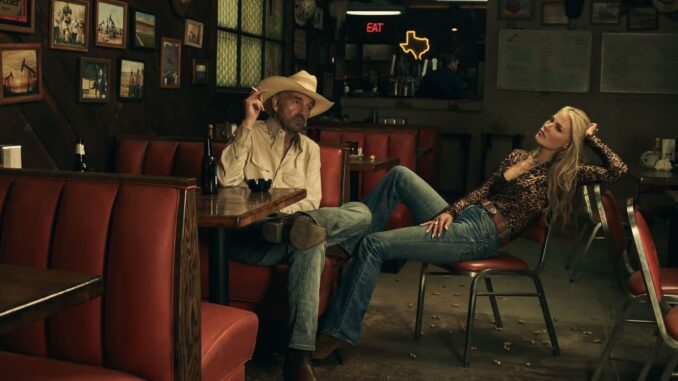
That’s why the announcement of Landman, Taylor Sheridan’s new Paramount+ series, has generated so much interest. Sheridan—creator of Yellowstone—has built a reputation for humanizing rural America, showing both the grit and nobility of people often ignored by coastal elites.
If Landman follows that trajectory, it could finally give the oilfield its Yellowstone moment: portraying roughnecks, landmen, and executives as complex people with real families, not just caricatures. It could also highlight how oil wealth shapes communities, economies, and politics.
But the risk remains: will Landman simply repeat old tropes of greed and corruption? Will it frame landmen—the negotiators who secure mineral rights—as exploiters of poor farmers, or as essential brokers in America’s energy future?
For the industry, the stakes are high. In an era when perception shapes policy, one television show can ripple into legislation, activism, and even workforce recruitment.
Why It Matters: The Real-World Impact of Pop Culture
Pop culture doesn’t just reflect society—it shapes it. Oil and gas lobbyists often note that the average American knows more about J.R. Ewing than about hydraulic fracturing. This ignorance matters.
- Policy and Regulation: Politicians react to public sentiment. If voters see oil as corrupt, they are more likely to support punitive taxes, regulations, or bans.
- Workforce Recruitment: Young people raised on a diet of villainous oil imagery may avoid careers in petroleum engineering or geology, pushing talent away from the sector.
- Investment and Finance: ESG movements thrive in part because of cultural narratives. If oil is seen as a “dirty villain,” investors are pressured to divest, regardless of economic logic.
- Community Relations: From North Dakota to West Texas, industry-community tensions are amplified when Hollywood reinforces suspicion.
In other words, Giant made oil glamorous, Dallas made it greedy, The Lorax made it destructive for children, and Syriana made it sinister for adults. Each shift altered how voters, regulators, and investors approached the industry.
The industry Perspective: Reclaiming the Narrative
For those within the industry, the lesson is simple: if you don’t tell your story, Hollywood will tell it for you. Lobbyists and educators now spend as much time on perception as on policy. Industry-funded documentaries, community outreach, and STEM education are all efforts to counteract the villain narrative.
The truth is more complex than any one film: oil powers hospitals, schools, and homes. Petrochemicals make plastics, fertilizers, and medicine possible. The industry employs millions of working-class Americans, many from communities far removed from Wall Street or Capitol Hill.
Yet complexity rarely makes for good TV. Heroes and villains are easier to script. Which is why the oil industry’s image problem is unlikely to go away anytime soon.

Act VI: Looking Ahead – Can Oil Ever Be the Hero Again?
The big question is whether the cultural pendulum will ever swing back. Could oil once again be framed as empowerment, as it was in Giant and The Beverly Hillbillies? Or is the industry destined to remain the default villain in Hollywood’s storytelling?
There are hints of possibility. The public’s awareness of energy security—especially after the Ukraine war—has softened some hostility. Films or shows that emphasize America’s dependence on domestic oil, and the people who provide it, could resonate. A nuanced depiction, balancing oil’s environmental costs with its economic necessity, could restore some balance.
But such nuance is rare in Hollywood. If Landman succeeds, it might pave the way for more complex narratives. If it fails, the oil industry will remain locked in its role as cultural antagonist.
Final Curtain
From Giant to Landman, Hollywood’s treatment of oil and gas has tracked America’s shifting anxieties about wealth, power, and survival. Oil began as the stuff of dreams, turned into a symbol of greed, and ended up a villain in the climate crisis.
The Lorax ensured even children grew up seeing industry as the enemy of nature. By the time they reached adulthood, the villainous oilman was as familiar as Darth Vader.
As the next chapter unfolds, one thing is certain: when the curtain rises, Hollywood will once again decide whether oil is America’s hero, its villain, or something in between.
For the men and women who work the rigs, sign the leases, and keep the lights on, the hope is simple: that the story told on screen finally reflects the real story off it.
Jason Spiess is an multi-award-winning journalist, entrepreneur, producer and content consultant. Spiess, who began working in the media at age 10, has over 35 years of media experience in broadcasting, journalism, reporting and principal ownership in media companies. Spiess is currently the host of several newsmagazine programs that air across a 22 radio stations and podcasts worldwide through podcast platforms, as well as a combined Substack and social media audience of over 500K followers. Connect with Spiess on LinkedIn or Follow his personal professional site Spiess On Earth
All Energy Has A Purpose and We Are All Energy!
Everyday your story is being told by someone. Who is telling your story? Who are you telling your story to?
Email your sustainable story ideas, professional press releases or podcast submissions to thecontentcreationstudios(AT)gmail(DOT)com.
CLICK HERE FOR SPECIAL PARAMOUNT + DISCOUNT LINK


