
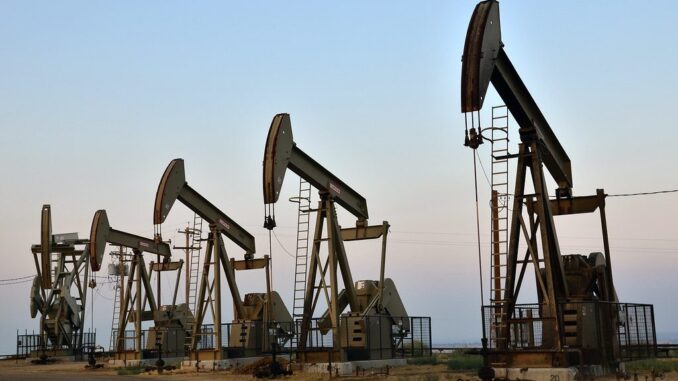
Stripper wells—also known as marginal wells—are oil or gas wells that are nearing the end of their economically viable life. In the U.S., a stripper oil well typically yields 15 barrels per day or less over a 12‑month period, while a stripper gas well is one producing 60,000 to 90,000 cubic feet per day depending on the standard used.
According to Wikipedia, as of 2023, a staggering 77% of the roughly 920,000 U.S. oil and gas producing wells fall into the stripper category.
A Backbone of Production—and of Rural Economies
Despite their low individual outputs, stripper wells collectively contribute a meaningful share to U.S. energy. As of 2015, they accounted for approximately 10–19% of U.S. crude oil production, with estimates varying by source—from 10% according to EIA to 18% in other accounts.
In sheer numbers, over 420,000 oil stripper wells and more than 296,000 natural gas stripper wells operate across the country, producing nearly 915,000 barrels of oil daily and contributing about 9% of natural gas output in the lower 48 states.
Economically, stripper wells are an anchor for rural communities. For every dollar of stripper well production, $1.017 of economic activity is generated, and every $1 million in production supports about 10 American jobs.
Historical Trajectory: Rise, Plateau, and Gradual Decline
Stripper wells have long been a key piece of the U.S. energy puzzle, especially since many prolific wells gradually transitioned into marginal producers.
- Mid-2010s: EIA recorded around 380,000 stripper oil wells at the end of 2015, a significant portion of all operating wells.
- Early 2000s to 2015: Growth in stripper well counts was offset by the boom in high‑production shale drilling. The share of oil from stripper wells fell from 19% in 2008 to about 10% in 2015.
- Decades‑long trend: DOE and NETL data show about 8,000 oil wells enter the stripper classification each year, while around 14,000 are plugged and abandoned, leading to a net decline of ~6,000 stripper oil wells annually. Conversely, stripper gas wells have seen net growth—~14,000 more become strippers each year, while only 3,000–4,000 are abandoned.
Obstacles on the Margins
1. Marginal Economics & Premature Abandonment
By design, stripper wells have razor-thin margins. When oil prices tumble, many become uneconomic to operate. From 1994 to 2006, about 177,000 marginal wells were prematurely abandoned, causing billions in lost oil revenue.
2. Retirement Liability & Environmental Concerns
When operators abandon stripper wells, they often leave behind the obligation—and cost—for cleanup. In states like California, retiring wells can cost on average $86,000 each.
Some operators idle or linger on wells just to avoid plugging obligations, such as “zombie wells”—non‑producing but unclosed wells that often persist for years, burdening the environment and taxpayers.
Nationwide, there are millions of orphaned or abandoned wells, with estimated cleanup costs reaching $300 billion. Federal efforts like the REGROW Act allocate $4.7 billion to address this, but capacity remains a challenge.
3. Regulatory & Taxation Pressures
Stricter environmental regulations—like those enabled by the 2009 EPA Endangerment Finding—have imposed disproportionate burdens on small producers. The National Stripper Well Association (NSWA) argues these rules have hit stripper well operators hardest.
Yet, tax breaks exist: In states like Oklahoma, stripper wells may pay 1% tax, far lower than the 7% standard; Michigan sets stripper tax at 4%, and other regions offer deductions or credits.
Support Mechanisms: Tech, Policy, and Ideology
1. Technology & Collaboration: The Stripper Well Consortium
A beacon of progress, the Stripper Well Consortium (SWC)—led by DOE and NETL alongside industry and academia—focuses on improving stripper well productivity through research on reservoir remediation, wellbore cleanup, and surface system optimization.
These efforts bring advanced technologies to small, marginal producers who traditionally lack the resources to adopt breakthroughs on their own.
2. Tax Relief & Regulatory Reform
Some states provide reduced severance taxes or credits for stripper wells to keep them viable.
Politically, NSWA celebrated the EPA’s August 2025 rescission of the Endangerment Finding, citing the decision as a recognition of economic reality and “common‑sense” policymaking—aimed at easing regulations that disproportionately affected small producers.
3. Addressing Orphaned Wells
Initiatives under the Infrastructure Investment and Jobs Act include funding to plug orphaned wells. Tools like well bonds, reclamation trusts, and adapting wells for geothermal energy are also being explored as creative solutions. Organizations like the Well Done Foundation work to plug wells one at a time, community-level impact by community-level impact.
Looking Forward: A Precarious but Promising Future
Stripper wells, often dismissed as relics, remain a vital thread in America’s energy tapestry—fueling production and providing economic lifelines to rural areas. Yet they face:
- Economic fragility—vulnerable to price swings;
- Environmental and legacy liabilities—with mounting risks from poorly managed or abandoned wells;
- Regulatory uncertainty—shifting environmental rules and antipathy toward small producers.
However, solutions are taking shape:
- Technology continues to prolong well life and productivity.
- Policy relief—tax breaks and deregulation—bolster feasibility.
- Orphan remediation funding and innovative reuse ideas (like geothermal repurposing) offer long-term sustainability.
Conclusion: Least Among Wells, But Far From Least Important
Stripper wells—often overlooked—are foundational to U.S. oil and gas infrastructure, responsible for billions in economic activity, sustaining thousands of jobs, and providing flexibility amid market volatility. Their survival hinges on balanced policies, meaningful technological investment, and addressing underlying environmental risks.
As the U.S. transitions toward cleaner energy futures, it’s vital that stripper wells aren’t simply abandoned or ignored. Through smart regulation, strategic funding, and innovative collaboration, these marginal assets can continue serving both local communities and the national energy landscape—stripping just enough to keep essential value flowing.

