
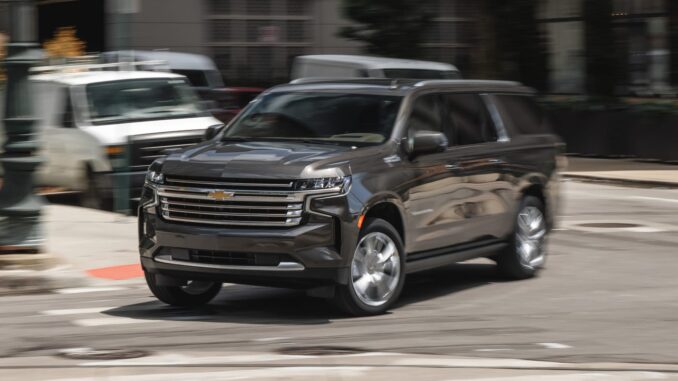
GM has issued an update to its service protocols for the 6.2L V8 L87 gasoline engine, a powerplant found in roughly 600,000 vehicles from the 2021–2024 model years, including popular full-size trucks and SUVs like the Chevrolet Silverado 1500, Tahoe, Suburban; GMC Sierra 1500, Yukon, Yukon XL; and Cadillac Escalade models.
A major recall, initiated in 2025 and still under scrutiny by the National Highway Traffic Safety Administration (NHTSA), addressed manufacturing defects such as contaminated rod bearings and crankshafts out of specification. These issues risked engine damage, failure, or loss of propulsion under load. The remedy varies by inspection outcome:
- Engines failing inspection receive a full replacement.
- Engines passing inspection receive a permanent oil viscosity upgrade from the factory-specified 0W-20 to 0W-40 full-synthetic oil, aimed at providing thicker film strength and better high-temperature protection for critical components like bearings and crankshaft journals.
This shift to a higher-viscosity oil has sparked discussion in energy and efficiency circles, as thinner oils (like 0W-20) are widely adopted industry-wide to minimize internal friction, reduce pumping losses, and help meet stringent fuel economy and emissions standards (e.g., CAFE regulations). Thicker oils can increase hydrodynamic drag, potentially raising fuel consumption—though real-world impacts vary by driving conditions, vehicle load, and engine calibration.
GM’s internal studies indicate the change from 0W-20 to 0W-40 has a negligible effect on fuel economy, based on vehicle performance testing with both viscosities. However, owner reports and class-action lawsuits (including claims of reduced MPG leading to higher lifetime fuel costs, potentially hundreds of dollars per vehicle) suggest mixed experiences: some drivers note drops of 1–3 MPG (or more in extreme cases), while others report no noticeable change or even slight gains post-recall (possibly due to related repairs or software tweaks).
The latest development, detailed in updated GM service bulletins (e.g., 25-NA-339 and related notices from early 2026), refines the oil specification for non-replaced engines under the recall:
- Dealers previously used Mobil 1 Supercar 0W-40 (a premium, dexosR-approved formulation with strong shear stability and low-temperature flow, originally prioritized for the fix).
- Now, once Supercar stock depletes, they must switch to Mobil 1 FS 0W-40 (also dexosR certified).
GM’s stated rationale: broader availability, lower cost, and equivalent performance for the recall remedy’s needs. The change eliminates a prior $50 dealer reimbursement for the pricier Supercar variant, making the process more economical for service centers and indirectly for owners (via potentially reduced labor/oil markups at dealers).
From an energy perspective, this adjustment doesn’t alter the core viscosity debate—both are 0W-40 grades with similar high-temperature behavior—but it highlights trade-offs in lubricant selection:
- Efficiency vs. Durability: Low-viscosity oils optimize for lab-tested MPG but may compromise long-term wear protection in stressed applications. The L87 case illustrates how real-world defects can force a reversion to thicker oils, potentially offsetting some CAFE gains across a large fleet.
- Fleet-Level Impact: With hundreds of thousands of vehicles affected, even a small per-vehicle MPG shift could translate to meaningful aggregate fuel use and CO₂ emissions changes over time—though GM maintains the impact is minimal.
- Consumer Cost: Beyond potential fuel penalties, owners face higher oil prices (0W-40 synthetics cost more than 0W-20) and ongoing warranty extensions (up to 10 years/150,000 miles for inspected engines).
This underscores broader trends in automotive lubricants: balancing regulatory-driven efficiency targets with emerging demands for component longevity amid high-output, direct-injected engines.
For L87 owners, future oil changes should follow the updated 0W-40 dexosR spec (Mobil 1 FS or equivalent). Non-recalled or fully replaced engines typically retain the original 0W-20 recommendation.
As NHTSA’s investigation continues and lawsuits progress, the case may influence how automakers approach oil specs in future high-displacement V8 designs—prioritizing robustness without fully sacrificing fuel economy gains from thinner oils.
Follow The Crude Life on YouTube or Substack or Facebook or LinkedIn