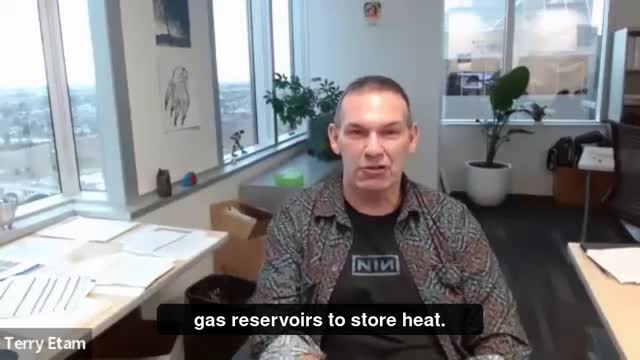

Some interviews arrive dressed as policy panels: formal tone, clean talking points, a neat arc from problem to solution. This one doesn’t. The conversation between Terry Etam—BOE Report columnist and author of The End of the Fossil Fuel Insanity—and Jason Spiess comes in sideways, like a porch-light chat that accidentally wanders into the control room of global energy strategy.
It opens with jokes about “the horn,” phones that run modern life, and a kid asking if a dead Wi-Fi zone means they’ve “left international airspace.” But the humor isn’t a detour. It’s the first marker on the map: we now live inside fragile infrastructure. When the rails underneath that infrastructure shake—banking systems, connectivity, authentication—life doesn’t just get inconvenient. It starts to break.
That becomes the quiet spine of the entire interview. Because once you accept that daily life depends on invisible systems, the rest follows naturally: grids, pipelines, permitting timelines, regulatory layers, and the surprising reality that the future of AI may not be decided by algorithms as much as by whether someone can reliably deliver electrons—every second of every day—at industrial scale.
What follows is a hybrid: late-night radio hangout and serious energy geopolitics briefing, two communicators riffing their way toward a handful of big ideas—energy as national security, North American resource integration, and the practical bottlenecks that keep “grand strategy” from becoming steel-in-the-ground reality.
The disarming tone that sets the hook: fragile infrastructure, real consequences
The early banter feels light, but it quickly reveals something audiences recognize in their bones: the modern world is a chain of dependencies. Spiess describes a cracked phone screen turning into a full-blown mobility crisis—locked out of accounts, unable to authenticate, stuck in the digital equivalent of a snowbank. Etam counters with a Canadian example: a major outage that knocked out payment systems and made credit cards useless. Suddenly cash wasn’t quaint. It was survival.
This isn’t just “tech inconvenience” storytelling. It frames a premise that matters for everything that comes later:
- Reliability isn’t a luxury.
- Infrastructure is policy.
- Resilience is a form of freedom.
Once that idea is in the air, the jump to energy becomes seamless. If a phone and an internet outage can trap people, what happens when power becomes the limiting factor for the next industrial wave?

Etam’s strongest contribution: operational realism on AI and power
The most valuable stretch of the interview arrives when the conversation pivots to AI and data centers. Etam doesn’t speak in slogans. He speaks in constraints—queue times, grid realities, redundancy, and timelines. And he captures a shift that many people in the broader public still haven’t clocked:
The conversation has moved from “How much will it cost to get power there?” to “Can we get power at all?”
That one line explains a lot of the new energy chessboard. AI development is capital-intensive, but capital isn’t the bottleneck if infrastructure can’t support the load. Data centers don’t just “use power.” They reshape demand curves. They require industrial-grade reliability. They don’t want intermittent supply. They want the kind of always-on certainty utilities were built to deliver—only now at a scale and pace that grid planners didn’t expect.
Etam’s framing makes the issue concrete:
- “Five nines” reliability (99.999%) isn’t a branding phrase—it’s an operational requirement.
- Redundancy isn’t optional—data centers won’t hinge their entire operation on a single point of failure.
- Grid connection is its own timeline, and timelines are where big visions go to die or get delayed.
Then he cuts through the popular “just do X” solutions. Nuclear is widely discussed, but Etam puts it on the clock: it’s powerful, but it’s not a quick fix in most cases. Geothermal is compelling, but site-specific and complicated. Even “small modular” doesn’t necessarily mean fast or simple when construction realities show up.
In other words: the physics and plumbing matter. And the interview’s strength is that it keeps returning to the plumbers—the people whose job is to ask, “Did you think about that?”
That’s also where the conversation becomes more than talk. It becomes a briefing on what actually decides the future: not what’s trending, but what can be permitted, financed, connected, fueled, and maintained.
The permitting and regulatory section: stories that stick because they’re real
If the AI segment is the intellectual centerpiece, the permitting segment is the one that listeners will retell.
Etam and Spiess trade examples that reveal how development in modern North America isn’t simply a matter of “finding resources” and “building stuff.” It’s navigating layered jurisdictions, overlapping rules, seasonal access, habitat protections, and consultative processes that can transform a minor operational choice into a long delay.
Etam describes a reality familiar to anyone who’s tried to build at scale:
- Multiple levels of government with different rulebooks
- Environmental constraints that are legitimate in purpose but complex in execution
- A process where approvals can’t be obtained from one “single window” authority
- Cumulative delay that makes projects slower, riskier, and sometimes not worth it
Then come the anecdotes—the kind that land because they aren’t ideological. They’re procedural.
A beaver dam becomes a regulatory event. A newly formed water body changes jurisdiction. Species presence triggers requirements. Tadpoles in runoff halt construction until determination is made.
You don’t have to be pro-development or pro-regulation to understand the takeaway: complexity compounds. A system can protect habitats and still create bottlenecks so severe that even legitimate projects struggle to move.
That’s the bigger value of this segment: it converts “permitting reform” from an abstract talking point into a lived reality that audiences can picture.
The thesis that emerges: “Fortress North America” as strategy, not slogan
As the conversation widens, Etam and Spiess land on an organizing framework—one that tries to explain not only energy decisions, but trade posture, critical minerals, industrial policy, and geopolitics:
Fortress North America: a resource-and-supply-chain strategy built around insulating the hemisphere from external dependency and pressure.
Whether listeners agree with every element of that thesis or not, the interview earns its place by presenting it as a coherent lens rather than a scattered hot take. The idea goes something like this:
- The U.S. is less interested in being the global policeman than it was for decades.
- Energy security sits at the root of national security.
- AI changes the stakes because it turns electricity supply into a strategic advantage.
- Critical minerals and processing capacity matter as much as oil and gas.
- North America—Canada included—becomes a logical integrated platform for resources, manufacturing, and power.
Etam connects this to broader strategic competition: not simply “oil” but supply chains, processing, and industrial capacity—the quiet infrastructure that determines whether a nation can build, defend, or innovate without relying on rivals for parts and materials.
You can hear the subtext: the next era isn’t only about who has resources. It’s about who controls the pathway from resource to usable product—mined, processed, manufactured, delivered.
That’s a “steel-in-the-ground” worldview. And it matches the interview’s recurring theme: reality is not the press release. Reality is the constraint.
Why this interview works: it makes the invisible visible
The reason this conversation lands is that it keeps pulling the curtain back. It doesn’t treat energy as a morality play. It treats energy as a system—one tied to daily life, security, and industrial capability.
- The jokes about phones and banking outages aren’t fluff; they establish dependence.
- The AI segment isn’t futurism; it’s logistics and reliability.
- The permitting stories aren’t partisan; they’re procedural friction points.
- The “Fortress North America” idea isn’t just a narrative; it’s an attempt to connect resources, manufacturing, defense, and geopolitical posture.
And that’s what makes the interview feel like two shows at once: the human hangout and the serious briefing.
All Energy Has A Purpose and We Are All Energy!
The Crude Life republishes their articles, features and stories online and/or in print under Creative Commons license CC BY-NC-ND 4.0.
Everyday your story is being told by someone. Who is telling your story? Who are you telling your story to?
Email your sustainable story ideas, professional press releases or podcast submissions to thecontentcreationstudios(AT)gmail(DOT)com.
CLICK HERE FOR SPECIAL PARAMOUNT + DISCOUNT LINK


