
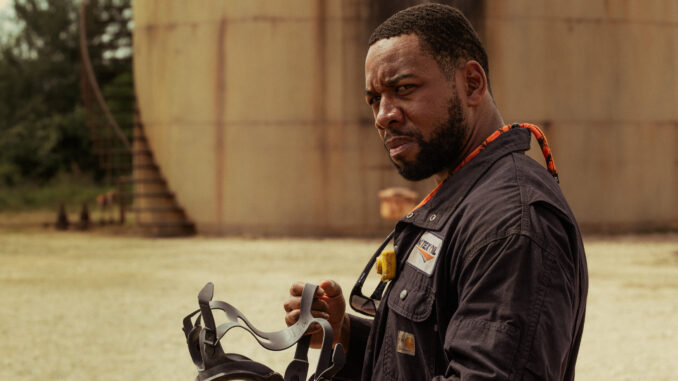
One of the most discussed scenes in the recent Landman episode isn’t about cartel violence, family drama, or oilfield bravado. It’s a financial conversation—short, dense, and easy to miss—that left a lot of viewers confused.
They’re talking about insurance.
But not the kind most people know.
Specifically, they’re talking about captive insurance—and once you understand what that is, the entire scene (and much of the show’s power structure) suddenly makes sense.
This isn’t about television drama.
This is about how modern risk is really managed in energy, infrastructure, and ESG-adjacent projects.
What Is a Captive Insurance Company (Plain English Refresher)
A captive insurance company is insurance a business creates for itself.
Instead of paying premiums to State Farm, AIG, or Lloyd’s of London, a large company sets up its own insurance company, often in a favorable jurisdiction. The operating company pays premiums to the captive. When losses occur, the captive pays the claims.
Think of it like this:
Instead of renting insurance forever, the company builds its own insurance house.
This is legal, common, and often smart—when done properly.
Captives are widely used by:
- Energy companies
- Infrastructure developers
- Carbon and ESG projects
- Agricultural co-ops
- Healthcare systems
- Public-private partnerships
Anywhere risk is complex, expensive, or politically sensitive.
Why Captives Matter in Energy & ESG Projects
Traditional insurers don’t like:
- Regulatory uncertainty
- Environmental liability
- Long-tail risks (claims that show up decades later)
- Politically controversial industries
Energy and ESG projects have all four.
So captives step in to:
- Insure risks the market won’t touch
- Keep costs predictable
- Maintain operational control
- Reassure investors and lenders
On paper, this looks like responsible risk management.
But here’s where Landman quietly tells a deeper story.
The Scene Explained: What They’re Really Saying
When characters discuss insurance structures, reserves, or “internal coverage,” they aren’t talking about safety.
They’re talking about who holds the risk when things go wrong.
A captive allows a company to say:
“We’re insured.”
But the real question is:
Insured by whom—and for whose benefit?
In Landman, the tension isn’t about whether risk exists.
It’s about where that risk lives.
And that’s where captives can quietly cross from tool to weapon.
How Captive Insurance Gets Abused (And Why This Matters)
A captive becomes problematic when it pretends to be insurance but doesn’t actually transfer risk.
Here’s how that happens—many of which are implied, not explained, in the show:
1. Fake or Exaggerated Risks
Companies insure bizarre or near-impossible events.
Premiums are paid.
Tax deductions are taken.
Claims never happen.
Money piles up—tax-advantaged.
That’s not insurance.
That’s tax parking.
2. Overpriced Premiums
The operating company pays far more than market rates.
Example:
- Market insurance: $500K
- Captive premium: $3M
The difference quietly shifts profit into a protected entity.
3. Claims That Never Get Paid
Real insurance pays claims.
Abusive captives:
- Delay claims
- Deny claims
- Reclassify losses
If nothing ever gets paid, the “insurance” isn’t real.
4. Circular Money
Money flows like this:
Company → Captive → “Loan” → Company or affiliate
The risk never leaves.
The money never leaves.
It’s financial theater.
5. Government-Adjacent Risk Shifting (The ESG Angle)
This is the most important part—and the one Landman hints at without spelling out.
In public-private partnerships, carbon projects, and infrastructure deals:
- Public money flows into projects
- Risk is “insured” via private captives
- When losses occur, liability becomes murky
- The public absorbs the downside
- The private entity keeps the upside
Everyone thinks the risk is covered.
But it isn’t—at least not in a way the public understands.
Why ESG Should Care (Deeply)
ESG frameworks focus heavily on:
- Transparency
- Accountability
- Risk disclosure
Captive insurance sits right at the intersection of all three.
A well-run captive:
- Makes projects safer
- Stabilizes finances
- Enables long-term planning
An abusive captive:
- Hides environmental liability
- Masks financial fragility
- Delays cleanup and accountability
- Transfers risk without consent
That’s not ESG failure because of energy.
That’s ESG failure because of governance.
What Landman Gets Right (Without Explaining It)
The show doesn’t demonize captives.
It doesn’t glorify them either.
Instead, it shows:
- How risk is negotiated, not eliminated
- How financial structures shape moral choices
- How “being insured” doesn’t always mean “being protected”
That’s a far more honest portrayal than most ESG marketing decks.
Captive insurance is not good or bad.
It is powerful.
And like most powerful tools in energy and ESG ecosystems, the danger isn’t the mechanism—it’s who controls it, who benefits, and who bears the cost when the math breaks.
Landman doesn’t explain captive insurance.
But it shows you exactly why you should understand it.
And once you do, that scene stops being confusing—and starts being uncomfortable.
Kai Emerson is a journalist and policy analyst with over a decade of experience reporting at the intersection of corporate ethics, sustainability compliance, and stakeholder accountability. With a background in environmental economics and a sharp eye for regulatory nuance, Kai brings clarity to the often opaque world of ESG disclosures, boardroom behavior, and greenwashing red flags.
All Energy Has A Purpose and We Are All Energy!
The Crude Life republishes their articles, features and stories online and/or in print under Creative Commons license CC BY-NC-ND 4.0.
Everyday your story is being told by someone. Who is telling your story? Who are you telling your story to?
Email your sustainable story ideas, professional press releases or podcast submissions to thecontentcreationstudios(AT)gmail(DOT)com.
CLICK HERE FOR SPECIAL PARAMOUNT + DISCOUNT LINK


