
On December 29, 2025, Lebanon and Egypt signed a memorandum of understanding (MoU) in Beirut to supply Egyptian natural gas to Lebanese power infrastructure — a practical, long-anticipated step toward addressing Lebanon’s chronic electricity shortfalls and costly reliance on fuel oil. The agreement was signed by Lebanese Energy Minister Joe Saddi and Egyptian Petroleum Minister Karim Badawi, and officials said it aims to deliver Egyptian gas for electricity generation in Lebanon once the necessary infrastructure is ready.
Lebanon’s power grid suffers from frequent outages and heavy dependence on imported fuel oil, draining state coffers and forcing many consumers to rely on diesel generators. Energy officials describe the new gas deal as a catalyst for transition to cleaner, cheaper, and more reliable generation — though several challenges remain before molecules can flow.
The Pipeline Route: Reviving a Regional Gas Artery
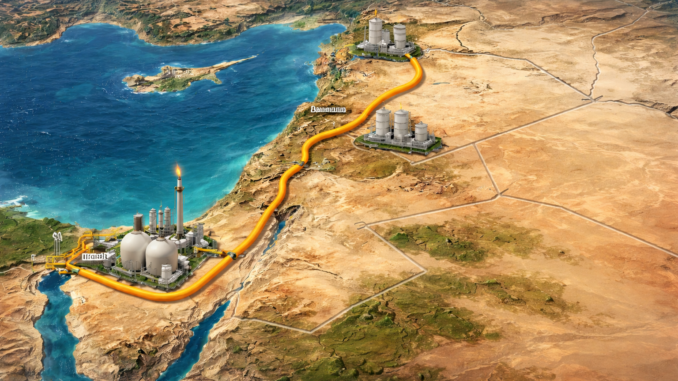
At the heart of this agreement is the Arab Gas Pipeline (AGP) — a trans-regional pipeline stretching from Egypt’s Sinai Peninsula northward through Jordan, Syria, and into Lebanon. Originally commissioned in the early 2000s to link these energy markets, the roughly 1,200-kilometer network was built to carry Egyptian gas across borders and includes branches that once extended toward both Syria and Lebanon.
Under the original design:
- Gas flows from Arish in Egypt into Aqaba, Jordan, and then northward to El Rehab near the Jordan-Syria border.
- From there, the pipeline traverses Syria, reaching key nodes at Homs and onward toward Lebanon’s Tripoli, enabling supply to Lebanon’s northern power plants.
In 2025, parts of this infrastructure require rehabilitation — particularly within Lebanon and sections in Syria — after years of underuse, conflict-related damage, and pipeline reversals that saw flows go to other markets at different times. The Lebanese energy ministry plans to seek donor financing to restore these segments and reactivate the northbound link for Egyptian gas delivery.
Why This Matters: Power, Economics, and Regional Energy Networks
1. Easing Lebanon’s Electricity Crisis
Lebanon’s state electric utility has produced just a few hours of power daily, contributing to economic hardship and social strain. Shifting from fuel oil to natural gas — which burns cleaner and costs less per unit of energy — could significantly reduce generation costs and increase reliable supply.
2. Building on Past Agreements
Lebanon’s leaders have pursued gas imports for years. A 2022 pact with Egypt and Syria envisioned piping roughly 650 million cubic meters per year of Egyptian gas to Lebanon’s Deir Ammar power plant via Syria — but geopolitical and financing hurdles stalled implementation.
The 2025 MoU restarts these ambitions under updated regional conditions.
3. Egypt’s Role as an Eastern Mediterranean Gas Hub
Egypt has emerged as a pivotal gas player in the Eastern Mediterranean. It boasts significant production and liquefied natural gas (LNG) export capacity, allowing it to balance domestic needs and regional exports. Egypt’s participation in multiple supply agreements, including gas deals with Israel and LNG ventures, underscores its central position in regional energy trade.
4. Interconnected Energy Markets
This agreement reflects broader trends toward regional energy integration. While Lebanon lacks significant domestic gas production, infrastructure like the AGP creates opportunities to link its grid with neighboring producers. Nearby Eastern Mediterranean gas discoveries (including in Israel and off Cyprus) and efforts such as the East Mediterranean Gas Forum illustrate a rising emphasis on cross-border energy cooperation — despite geopolitical complexity.
Challenges Ahead
Despite the political fanfare, several obstacles remain:
- Infrastructure Rehabilitation: Sections of the Arab Gas Pipeline need repair, especially within Lebanon and war-impacted parts of Syria.
- Financing: Lebanon will need external funding to upgrade and maintain pipeline links and associated infrastructure.
- Geopolitical Complexities: Regional tensions and sanctions — particularly regarding Syria — have complicated past efforts and could influence implementation timelines.
Looking Forward
If executed, the Egypt–Lebanon gas arrangement could be a transformative energy milestone for Beirut, unlocking more stable electricity, lowering generation costs, and reintegrating Lebanon into Eastern Mediterranean gas networks. Beyond bilateral ties, this agreement underscores how energy cooperation can serve broader strategic and economic objectives in a region long marked by volatility but rich in hydrocarbon potential.
.Jason Spiess is an multi-award-winning journalist, entrepreneur, producer and content consultant. Spiess, who began working in the media at age 10, has over 35 years of media experience in broadcasting, journalism, reporting and principal ownership in media companies. Spiess is currently the host of several newsmagazine programs that air across a 22 radio stations and podcasts worldwide through podcast platforms, as well as a combined Substack and social media audience of over 500K followers. Connect with Spiess on LinkedIn or Follow his personal professional site Spiess On Earth
All Energy Has A Purpose and We Are All Energy!
The Crude Life republishes their articles, features and stories online and/or in print under Creative Commons license CC BY-NC-ND 4.0.
Everyday your story is being told by someone. Who is telling your story? Who are you telling your story to?
Email your sustainable story ideas, professional press releases or podcast submissions to thecontentcreationstudios(AT)gmail(DOT)com.
CLICK HERE FOR SPECIAL PARAMOUNT + DISCOUNT LINK


