
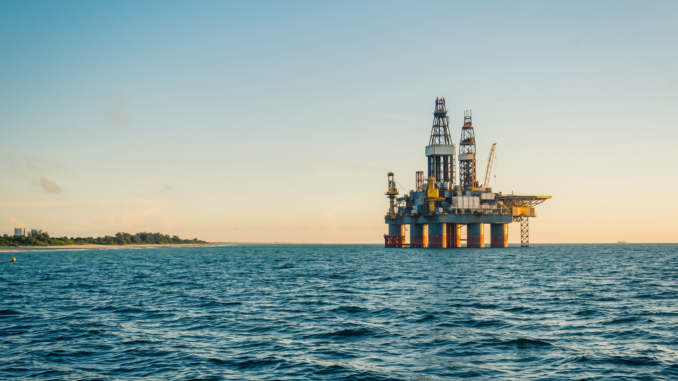
A quiet squall is brewing in the Gulf — one that juxtaposes the promise of American energy independence with the political pushback of states determined to protect their shorelines. At the heart of the storm is a federal plan to open federal waters off Florida’s coast — and other long-off-limits U.S. waters — to new offshore oil leasing. What’s unfolding is not merely a technical policy change but a full-blown tug-of-war between federal energy strategy and coastal economic interests.
A Federal Push for Expanded Offshore Drilling
Late in 2025, the U.S. Department of the Interior formally proposed a sweeping offshore drilling strategy that would mark the largest expansion of offshore lease sales in decades. Under the plan, the federal government would offer a slate of new lease sales in federal waters off California, Alaska, the central Gulf of Mexico, and — controversially — waters near Florida’s Gulf Coast beginning as early as 2029 and 2030. These would potentially open areas that have been off-limits for decades to exploration and development.
The Bureau of Ocean Energy Management (BOEM) — the Interior agency tasked with overseeing offshore leasing — has outlined two proposed lease sales in the Gulf region near Florida as part of a broader 34-sale program across U.S. federal waters through 2031.
From the administration’s perspective, this aligns with a broader drive to bolster U.S. energy production and energy dominance on the global stage. Officials argue that opening more offshore acreage will support jobs, enhance domestic production, and more fully leverage America’s natural resource wealth.
Bipartisan Backlash in Florida
That federal vision has collided with unexpected bipartisan opposition — especially in Florida, where the political front lines blur traditional partisan boundaries.
Florida’s entire congressional delegation — predominantly Republican — has urged President Donald Trump to remove their state’s waters from any drilling plan. In a rare note of unity, both Republican Senators Rick Scott and Ashley Moody have led the charge, emphasizing the profound economic and strategic risks.
In a December 2025 letter to the White House, lawmakers warned that offshore drilling could threaten military operations — particularly training ranges in the eastern Gulf — and undercut the tourism economy that supports hundreds of thousands of jobs and nearly $128 billion in annual spending in Florida alone.
Even Florida’s GOP governor, Ron DeSantis, has expressed concerns. DeSantis pointed out that existing protections put in place in 2020 — which successfully kept drilling out of the eastern Gulf — could be undermined by the new federal plan.
The opposition extends beyond elected leaders. A bipartisan Florida Coastal Protection Act has been championed in Congress to codify a permanent ban on drilling off Florida’s coast — an effort underscored by warnings about oil spills, marine threats, and risks to beaches that are central to the state’s identity and economy.
National Resonance — From California to the Gulf
Florida’s stance isn’t isolated. Just as Florida’s Republicans and Democrats unite in opposition, a striking political convergence has emerged elsewhere.
In California — a state with no new federal offshore leases since the mid-1980s — Democratic Governor Gavin Newsom condemned the federal proposal, saying expanded drilling is “dead on arrival” and risks communities and coastal economies.
Across the broader policy sphere, lawmakers from both parties in Congress have signaled resistance to new offshore drilling in sensitive areas — citing concerns about economic impact, environmental risk, and legal challenges that could delay or complicate implementation.
Where the Debate Turns Next
At its core, this dispute reflects a deeper tension in U.S. energy policy: balancing expanded access and production with local economic stability and environmental priorities.
The Interior Department’s proposal is still in draft form, and BOEM has opened a federal comment period that will extend into January 2026. During this time, coastal communities, energy stakeholders, local governments, and everyday citizens can weigh in — a process that could shape whether these politically fraught lease sales move forward.
Critics argue that America already has substantial offshore leases on the books that have not been developed and that new leases aren’t necessary to meet national energy needs. They also point to the economic importance of ocean-dependent sectors like tourism and recreation, which collectively generate far more jobs and economic value than offshore oil production in many coastal states.
Supporters counter that expanding offshore leasing strengthens the nation’s energy portfolio and provides long-term investment and employment opportunities that can benefit broad swaths of the economy.
Conclusion: A Crossroads for U.S. Offshore Policy
The simmering debate over offshore drilling near Florida’s shores isn’t just a local policy dispute — it’s a national flashpoint that encapsulates the broader crossroads of energy, economics, and regional priorities. As states like Florida and California push back, the administration’s plan will likely draw sustained political resistance, legal challenges, and public scrutiny.
For now, the sands off Florida’s beaches remain at the heart of a larger debate about how, where, and under what terms the United States should leverage its offshore resources — with implications that extend far beyond any single coastline.
If American energy is truly to be unleashed in 2026, the industry must recognize a simple reality: supporting energy also means supporting the communities and leaders willing to engage honestly with it.
All Energy Has A Purpose and We Are All Energy!
The Crude Life republishes their articles, features and stories online and/or in print under Creative Commons license CC BY-NC-ND 4.0.
Everyday your story is being told by someone. Who is telling your story? Who are you telling your story to?
Email your sustainable story ideas, professional press releases or podcast submissions to thecontentcreationstudios(AT)gmail(DOT)com.
CLICK HERE FOR SPECIAL PARAMOUNT + DISCOUNT LINK


